The readings for today are taken from Francis Xavier (1506-1552) and Roberto de Nobili (1577-1656) and relate directly to western missionary activity in India in the sixteenth and seventeenth centuries. Both Francis Xavier and de Nobili were members of the Society of Jesus. But their approaches to the task of evangelization form a study in contrasts.
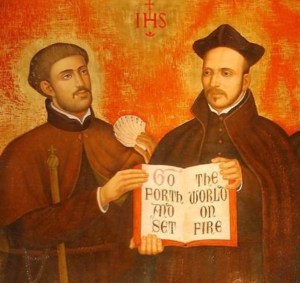
Francis came from an aristocratic family within the Kingdom of Navarre in northern Iberia. While a student at the University of Paris, he fell under the charismatic influence of Ignatius Loyola and he would go on to be, with Ignatius, a founder of the Society of Jesus. At Ignatius’s request he set out in 1540-1541 on travels to several of the centers of growing Portuguese economic power in Asia. The influence of Francis Xavier over European Jesuit and Catholic witness, especially in India and Japan, was profound. You will find an introduction to Francis Xavier and the distinctive quality of his missionary approach to the lower-caste Parava people included in the reading.
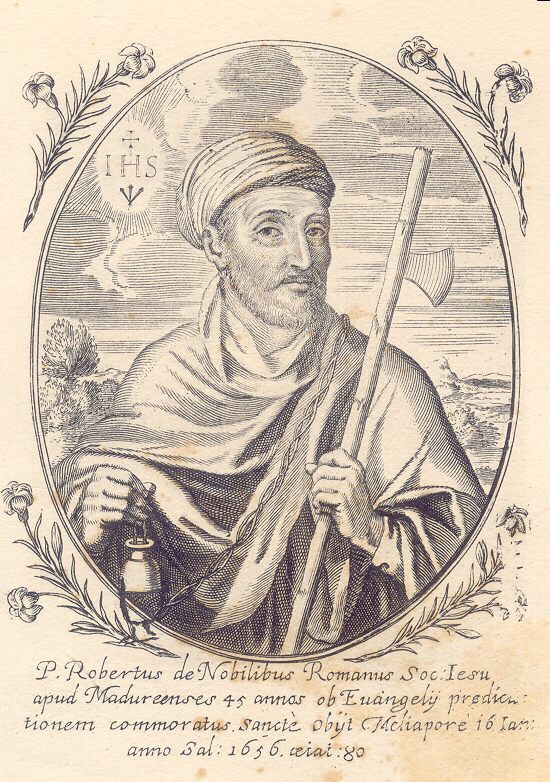
Roberto de Nobili, on the other hand, may require a bit of orientation. See the brief discussion of his ministry by R.E. Frykenberg in Hastings, ed., A World History of Christianity (p. 169). De Nobili’s adopting of the dress and mode of life of Hindu Brahmins and his successful mission among them contrasted sharply with the methods of Francis Xavier and the ministry of de Nobili’s senior Jesuit colleague Gonçalo Fernandes (1541-1619), whom he joined in Madurai in 1606. De Nobili’s efforts to adapt to the religious and cultural setting led to criticism from other European missionaries, including Fernandes, who accused him of abandoning Christianity for Hinduism and low caste Indians for the higher castes. Responding to critics, de Nobili wrote several defenses of his accommodationist missionary method that were published in the West. (His approach is similar to the one earlier practiced by Matteo Ricci in China, about whom you will read shortly.) The Report Concerning Certain Customs of the Indian Nation (published in 1615) is one of these defenses. Here de Nobili describes aspects of the distinctive dress and manners of members of the Indian priestly and ruling class, distinguishing between cultural and specifically religious practices, and arguing for the necessity of adapting to local custom. The high caste Hindu converts to Christianity wished to maintain traditional caste and ritual practices and de Nobili argues that an effective practice of Christian mission will accommodate these cultural elements. The Dialogue on Eternal Life is an example of de Nobili’s writing not for a European audience, but for the Indians among whom he ministered. It was written in Tamil (the language most broadly spoken in the Tamil Nadu region of south India where de Nobili ministered) perhaps around 1610. The treatise takes the form of a dialogue or exchange between a guru (teacher) and disciple, and uses principles borrowed from the theology of Thomas Aquinas to argue for the truth of Christian revelation, frequently employing Indian terms and images. De Nobili’s missionary efforts produced a Christian community of considerable size in Madurai in south India, and similar methods were adopted by Jesuit missionaries in other regions of India. In 1700 his Jesuit successors reported that Christians connected with their ministry numbered more than 150,000, with 5,000 new converts being received annually.
As you think about these readings, consider how we may evaluate both the success and the faithfulness of the missionary endeavors described in these texts. Can the practice of “living on someone else’s terms” in order to share the Christian message become a surrender of the necessary scandal of the Christian gospel? How do you identify what is essential to Christianity and what is merely the baggage of culture and local custom?

