In the early 1980s, the German Cardinal Joseph Ratzinger (1927-2022; later Pope Benedict XVI) was appointed prefect of the Congregation for the Doctrine of the Faith (CDF: the organ of the Vatican responsible for maintaining theological integrity, formerly known as the Office of the Inquisition). Ratzinger was concerned about and brought energy to examining and criticizing Latin American ecclesial and theological developments centered around a gospel that spoke not only to the poor but from the very mouths of those suffering economic and political violence. Latin American liberation theology was a powerful influence within Latin America but also gaining broad global attention, and its teaching appeared to be a threat not only to right wing political power but also to the traditions and the hierarchy of the Catholic Church. Cardinal Ratzinger denounced what he saw as the heretical directions of the movement in his 1984 “Instruction on Certain Aspects of the ‘Theology of Liberation.’” At the same time, certain prominent priests and professors were summoned to examinations in Rome or named in explicit critiques. The pioneer, Peruvian priest and Dominican friar Gustavo Gutiérrez (1928-2024) was warned; Spanish-Salvadoran Jesuit Jon Sobrino (1938- ) and the Brazilian Franciscan Leonardo Boff (1938- ) were subject to discipline, including silencing.
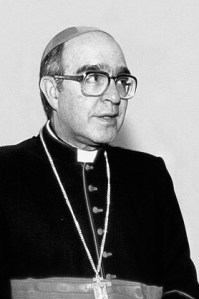
Despite liberation theology’s growing popularity among Latin American Catholics, including many of the bishops, some Latin American Catholic leaders were preparing their own expressions of concern and resistance. The emerging champion of the conservative reaction among the bishops was Alfonso López Trujillo (1935-2008). López Trujillo’s family was from Colombia’s financial and political elite. Ordained a priest in 1960, and earning advanced degrees in sociology, theology, and philosophy in Rome, he rose quickly through the ranks of the church to become Archbishop of Medellín in 1979 and was appointed cardinal by John Paul II in 1983.
The document excerpted below, ‘Declaration of Los Andes,’ was López Trujillo’s attempt to give voice to those within the Latin American church, like himself, who viewed with alarm the movement that was (purportedly) sacrificing traditional fidelity, including subordination to the hierarchy’s wisdom, for the relevance of a supposedly liberative message. Over time, López Trujillo’s stature and influence would grow within the Vatican in Rome for his efforts to uphold conservative moral positions, particularly around gender, sexuality, and reproduction.
SOURCE: “Communio (Latin American Edition): ‘Declaration of Los Andes’ (July 1985),” in Liberation Theology: A Documentary History, ed. Alfred T. Hennelly, S.J. (Maryknoll, N.Y.: Orbis Books, 1990), 444-450.
1. We the undersigned are Christian pastors and laity with training in philosophy, theology, and the social sciences. …
Our purpose was to investigate the response which the so-called theologies of liberation have made to the serious challenge to the Christian conscience created by the misery and marginalization of vast numbers of the people of Latin America. …
2. The common denominator which unites us, which led to our meeting, and which dominated our lengthy meetings is essentially the following: complete fidelity to the gospel, as it is professed by the church’s magisterium, by the social teaching of the church, and by the content of the Instruction Libertatis Nuntius [“Instruction on Certain Aspects of the Theologies of Liberation”‘]. …
4. The theology of liberation, as the authors just mentioned understand it, claims to be a “new way of doing theology” from the perspective of “the oppressed” and takes a certain interpretation of liberating praxis as its source and as the ulti- the ultimate criterion of theological truth. This requires an essentially political reading of the word of God, which ends up interpreting the whole of Christian existence, faith, and theology in a political key. This radical politicization is aggravated by the uncritical use of a rationalist biblical hermeneutic, which ignores the basic exegetical criteria of tradition and of the magisterium. …
5. (b) In no case can praxis be the first or foundational act of theological reflection. Praxis and experience always arise from a definite and concrete historical situation. Experiences like this can help theologians adapt their interpretation of Scripture to their own time. But prior to praxis is the truth the divine master has entrusted to us. …
6. If the above is valid for any type of praxis, it becomes much more problematic in the concrete case of certain theologies of liberation, since their “liberating praxis” acquires a meaning that is clearly derived from Marxism. …
7. Theology can and should make use of the social sciences. However, on the one hand it cannot accept the subordination of theological discourse to the discourse of any positive science. On the other hand, it cannot concede scientific validity to the Marxist analysis of society or to the dialectical interpretation of history, since their ideological character is evident. Finally, it must be denied that the Christian people in the name of some science are forced to work in a single sociopolitical movement, since this ignores their right to legitimate pluralism in temporal matters, where Christian faith does not require only one solution.
9. Jesus Christ is presented as the “subversive from Nazareth,” who entered into and deliberately committed himself to the “class struggle” of his time. His life and liberating death are seen as simply that of a martyr for the people, who was crushed by the ruling Judeo-Roman establish-ment. This is undoubtedly an attempt to manifest the historical, social, and even political dimension of the life of Jesus. It is certain that the Lord did move within the social context of his own time and place. The portrait, however, of a “historical Jesus” who died for the poor classes and against the rich ones is not drawn from the New Testament but rather from an a priori dialectic of conflict, which is profoundly at odds with the faith of the church who died for the poor classes and against the rich ones is not drawn from the New Testament but rather from an a priori dialectic of conflict, which is profoundly at odds with the faith of the church on fundamental issues. For one thing, the mystery of the incarnate word and of the divine nature of Christ is, if not openly denied, at least so obscured and distorted that in this interpretation the church can no longer recognize its own faith as it was defined in the early councils. Furthermore, the sacrificial and salvific dimension of the Lord’s death is dissolved in favor of a political interpretation of his crucifixion, thus bringing into question the salvific meaning of the entire economy of redemption.
The profound mystery of the passion and death of Jesus and the unfathomable depths of the love of God the Father revealed therein are thus obscured, as are the radical meaning of sin and the dignity proper to human beings as objects of this boundless divine love.
It is only in the light of these mysteries as proclaimed by the faith of the church that we understand the full meaning of the redemption—namely, that Christ liberated us fundamentally from the radical slavery of sin, and by virtue of this his liberation should extend itself effectively in the effort to remove economic, social, and political forms of slavery, which are derived from sin. …
11. The evangelization of the poor is a messianic sign which looks to liberation from all the sufferings and enslavements of human existence. But this statement has on occasion been interpreted in a unilateral way, which distorts its biblical meaning. Poverty is reduced to its material aspect and even more is interpreted by means of a sociology of conflict. The poor are thus identified with the proletariat and are viewed through the lens of class struggle, which involves inevitable partisanship. The result is a kind of theological reflection and ecclesial preaching centered almost exclusively on socio-economic questions, at times bitterly self-seeking and even more frequently overlooking or forgetting essential dimensions of faith and basic features of human experience. We have observed the uneasiness of many persons who feel abandoned and ignored in their aspirations and religious needs because of a mistaken interpretation of the option for the poor. …
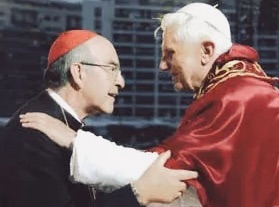
13. […] In communion with the church’s hierarchy, we believe that authentic liberation is based on “the truth about Jesus the savior, the truth about the church, and the truth about humankind and its dignity” (Instruction, XI, 5), and that this liberation must be understood in a context that is at the same time perennial, dynamic, and capable of renewing the teaching of the church, especially its social teaching. …
14. [W]e state that the social teaching, offers principles capable of effective guidance in the task of building a society based on justice and solidarity. An adequate solution to the present problems of Latin America will not be achieved by simplistic declarations based on Marxist ideology, but rather by vigorous action based on careful analyses of the multiple causes of the poverty of so many individuals and families. …
15. Every genuine theology must incorporate this joyous and tremendous truth: what is at stake in our historical existence is eternal life, inasmuch as the total and definitive liberation of the human person will only take place in the consummation of the kingdom in heaven and in the vision of God face to face, to which all of us are summoned. (…) [I]t is only in this truth that the supreme dignity of the human person shines forth, that person created in the image of God and summoned to sonship with God; it is this alone that grounds the ethical imperative that never allows the human person to be considered a mere object at the mercy of powerful interests or any kind of ideology.

