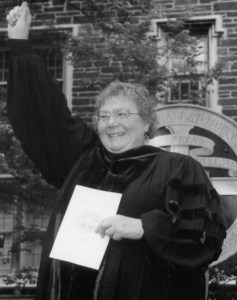
Beverly Wildung Harrison (1932-2012) was among the most influential of Christian feminist theological ethicists in the latter part of the twentieth century. Her writing, teaching, and mentoring had a profound influence on generations of students who would go on to shape dimensions of feminist and womanist Christian reflection and discourse. A Presbyterian by tradition, background, and self-identification, she emerged as a force in theological education when urgent questions for Christian feminists centered on the problem of whether the traditions of Christianity were irremediably patriarchal and androcentric. Was a genuinely feminist theological path possible only in a “postchristian” direction? Or were there liberating resources and directions to be discovered in Christian texts and patterns of practice—so that a reformed Christian paradigm might accommodate the justice-seeking that feminists and other liberationists were called to? The work excerpted below is part of this broader feminist-theological conversation. As Harrison herself explained (see her Author’s note, below), the immediate occasion was her 1980 installation as tenured professor in a chair of Christian Ethics at Union Theological Seminary in New York City. She chose to focus her address for the occasion on Christian ethics and feeling—and particularly anger. At the time of this address, the most prominent and persuasive representative of a radical postchristian and separatist-feminist philosophy and ethics was Mary Daly (1928-2010), a professor at Boston College. Harrison engaged Daly with appreciation but from a position of basic disagreement (as she explained) in order to move into the components of her own constructive liberationist-ethical stance.
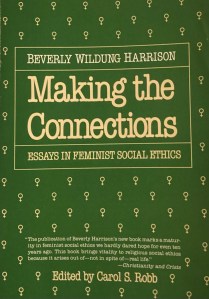
SOURCE: Beverly Wildung Harrison, “The Power of Anger in the Work of Love: Christian Ethics for Women and Other Strangers,” in Harrison, Making the Connections: Essays in Feminist Social Ethics, ed. Carol S. Robb (Boston: Beacon Press, 1981), 3-21, 269-72 (edited here for brevity).
The Power of Anger in the Work of Love: Christian Ethics for Women and Other Strangers*
Undoing Patriarchal Processions
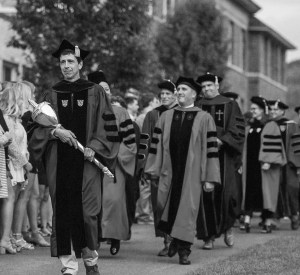
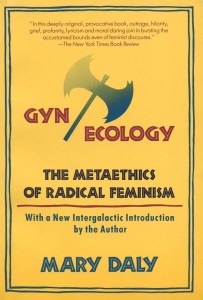
Readers who are knowledgeable in feminist theology and who have had sufficient intellectual energy to read and appropriate Mary Daly’s powerful, angry book Gyn/Ecology: The Metaethics of Radical Feminism, may already understand why it was important then, as now, to begin a discussion of feminist ethics by focusing on the issue of academic processions. Processions, Daly argues, exemplify all that is wrong with the patriarchal world; they are the essence of “the deception of the fathers.”[1] Daly believes that this “deception of the fathers” — the way we were all taught to view the world through rigidly compartmentalized, static categories and academic disciplines — is killing us all. This fixation with processions, she contends, has its origins in Christianity, beginning with the procession of the trinitarian god. The god of Christian orthodoxy — with its threefold, exclusively male manifestation — is, she suggests, expressive of the male homosexual fixation that underlies the dominant spirituality of our culture, whether in an ecclesiastical or an academic expression. In either academic or ecclesiastical contexts, processions mark out clearly, and protect, male privilege and control. Daly stresses that this sacralizing and deification of male functions in our world will be ended only if women who understand the idolatry involved give up participation in processions altogether. In fact, she is so serious in this claim that the power of procession sustains the patriarchal oppression of women that she designates “procession” as the first (the very first) of the eight deadly sins of Phallocracy[2] These eight deadly sins represent Daly’s alternative way of viewing human evil; they replace the traditional seven deadly sins of Christian teaching. It should not be lost on any of us that on the traditional list of deadly sins the “sin” of anger was usually given conspicuous emphasis. Happily, no feminist analysis could perpetuate the notion that anger, per se, is evil, and Daly’s analysis surely does not do so.

Pistoia Santa Trinità Altarpiece (1455-1460) by Francesco Pesellino and Fra Filippo Lippi (detail)
I acknowledge that Mary Daly would not exempt even an academic procession numerically dominated by females from her unequivocal indictment of processions as instruments of patriarchy. She is adamant that processions can be only a “frozen mirror image” of “Spinning,” which is her metaphor for the wholistic, spontaneous, intellectually imaginative modes of knowing, being, and doing of which women – when not dependent on patriarchy for self-definition — are capable. There can be no doubt that the mere presence of a few women in traditional processions serves, first and foremost, to disguise the devastation that dominant institutions wreak upon women and others who do not “fit in” — for example, males of color or males whose ideological viewpoint or sexual orientation does not reinforce the dominant cultural mode. Even so, my theory of social change obviously diverges from hers or I would not have organized a procession at all.
I agree with Daly that a chief evidence of patriarchal control in our world is women’s subtle conditioning that reinforces our reluctance to develop a sense of our own power to identify, name, and characterize our world. For all of the methodological differences that separate my position from Daly’s,[3] it is no part of my argument with her to deny the depth of the problem of misogyny in human history or in the dominant forms of historical Christianity. Among the many debts we owe Mary Daly is this: She has described the problem in an uncompromising way and has made it impossible for any intellectually honest person to deny the necessity of a feminist critique of Christianity. I have long argued this point in light of Daly’s analysis — that it should never be the business of any feminist who remains within the Christian community to mitigate the painful encounter that the Christian church must have, and has yet to have, with the full force of a feminist critique. We have very far to go before Christianity acknowledges adequately its complicity in breeding and perpetuating the hatred and fear of the real, full, lived-world power of female persons! …
At times I wish I believed, with Daly, that the power of patriarchy could be overthrown if only we women would absent ourselves from patriarchal processions altogether. If only the withholding of power were adequate to bring about social change in our world, undoing oppression would not be difficult. …
Even if many contemporary women were to choose the option of nonparticipation, we may be sure that processions would continue precisely because they are such powerful human actions, which is to say that they express energy, movement, and festivity. If men have enjoyed them, why should women not enjoy them too? …
This is why I cannot concur with Daly’s call to women to abandon processions and join the “Journey to the Otherworld” of segregated feminism. The joyful world of Womanspace, which she commends to us as a permanent habitat, can be at best only an occasional sanctuary for the feminist for whom life itself, and the embodied world of flesh and blood, are the true gifts of God. For this reason the turn in Mary Daly’s writing, marked by a new emphasis on the language of otherworldliness, disturbs me. In contrast to Daly, my basic ethical thesis is that women, and other marginated people, are less cut off from the real, material conditions of life than are those who enjoy the privileges of patriarchy and that, as a result, an otherworldly spirituality is far removed from the life experience of women. Even if Daly were clear, as I hope she is, that her use of the language of otherworldiness is metaphorical, her imagery still seems misguided. Our need is for a moral theology shaped and informed by women’s actual historical struggle. Women’s experience, I submit, could not possibly yield an “otherworldly” ethic. Nor can feminists ignore the growing but morally dubious fascination with forms of world-denying spirituality in our culture. …
Daly’s metaphorical leap into Otherworldly Womanspace may well come from the real agony and pain she has experienced in the face of misogyny.[5] The inexhaustibility of her rage suggests that this is so. However, a feminist metaethics must not fail to affirm and generate our power to affect the existing world. We must wrest this power of action from our very rightful anger at what has been done to us and to our sisters and to brothers who do not meet patriarchy’s expectations. The deepest danger to our cause is that our anger will turn inward and lead us to portray ourselves and other women chiefly as victims rather than those who have struggled for the gift of life against incredible odds. The creative power of anger is shaped by owning this great strength of women and of others who have struggled for the full gift of life against structures of oppression. …
I submit that even the present widespread cultural and political backlash against feminism is strong testimony to this fact. To be sure, the full world historical project that feminism envisages remains a distant dream — that is, that every female child in each and everycommunity and culture will be born to share a full horizon of human possibility, that she will have the same range of life options as every male child. This is, and remains, “the longest revolution.” But this revolution, for which we have every right to yearn, will come sooner if we celebrate the strength that shines forth in women’s lives. This strength and power must stand at the center of the moral theology that feminism generates.
What I propose to do in the space remaining is to identify several positive dimensions of women’s historical experience that I believe are most urgent to the reshaping of traditional Christian theological ethics to bring that ethics closer to a moral norm inclusive of all humanity. I also invite you to consider what difference it would make to our understanding of “the great commandment” — our love of God and our love of neighbor — if these basepoints drawn from women’s experience received their due. It is out of such a process that we can begin to develop an adequate feminist moral theology.[6]
… My theological method is consonant with those other liberation theologies that contend that what is authentic in the history of faith arises only out of the crucible of human struggle.[7] This I take to be the central, albeit controversial, methodological claim of all emergent liberation theologies. That the locus of divine revelation is in the concrete struggles of groups and communities to lay hold of the gift of life and to unloose what denies life has astonishing implications for ethics. It means, among other things, that we must learn what we are to know of love from immersion in the struggle for justice. I believe that women have always been immersed in the struggle to create a flesh and blood community of love and justice and that we know much more of the radical work of love than does the dominant, otherworldly spirituality of Christianity. A feminist ethic, I submit, is deeply and profoundly worldly, a spirituality of sensuality.[8]
Basepoints for a Feminist Moral Theology
Activity as the Mode of Love
The first point at which women’s experience challenges the dominant moral theology is difficult to see historically because of the smoke screen created by a successful nineteenth-century male counterattack on the first women’s liberation movement. Because of this counterattack, most educated, middle-strata women have internalized an ideology about ourselves that contradicts our actual history. Historically, I believe, women have always exemplified the power of activity over passivity, of experimentation over routinization, of creativity and risk-taking over conventionality. Yet since the nineteenth century we have been taught to believe that women are, by nature, more passive and reactive than men. …
… The important point here … is that a theology that overvalues static and passive qualities as “holy,” that equates spirituality with noninvolvement and contemplation, that views the activity of sustaining daily life as mundane and unimportant religiously, such a theology could not have been formulated by women. In contrast, Sojourner Truth spoke authentically, out of the real lived-world experience of women, when she defined her womanhood in this way:

“Nobody ever helped me into carriages, or over mud puddles, or gave me the best place. And ain’t I a woman? Look at me! Look at my arm! I have ploughed and planted and gathered into barns, and no men could head me! And ain’t I a woman? I can work as much and eat as much as any man when I can get it and bear the lash as well. And ain’t I a woman? I have borne thirteen children and seen most of them sold off to slavery, and when I cried out with my mother’s grief, none but Jesus heard me. And ain’t I a woman?”[9]
Women have been the doers of life-sustaining things, the “copers,” those who have understood that the reception of the gift of life is no inert thing, that to receive this gift is to be engaged in its tending, constantly. I believe we have a very long way to go before the priority of activity over passivity is internalized in our theology and even farther to go before love, in our ethics, is understood to be a mode of action. In Beyond God the Father, [10] Mary Daly began the necessary theological shift by insisting that a feminist theism has no place for a God understood as stasis and fixity, that out of women’s experience the sacred is better imaged in terms of process and movement. Her proposal that God be envisaged as Be-ing, as verb rather than as noun, struck a deep chord in her readers, and not merely in her women readers. …
It is necessary to challenge the classic ontology of Be-ing even more deeply than Daly has done. Catholic natural law theologies, it has often been argued, fail to do justice to the fact that the power of nature passes through what Marx called “the species-being” of human nature. Our world and our faith are transformed, for good or ill, through human activity. A feminist moral theology needs to root its analysis in this realm of radical moral creativity. Such freedom is often abused, but the power to create a world of moral relations is a fundamental aspect of human nature itself. In my opinion, the metaphor of Be-ing does not permit us to incorporate the radicality of human agency adequately. Do-ing must be as fundamental as be-ing in our theologies. …
Though our culture has come to disvalue women’s role, and with it to disvalue nurturance, genuine nurturance is a formidable power.[13] Insofar as it has taken place in human history, it has been largely through women’s action. For better or worse, women have had to face the reality that we have the power not only to create personal bonds between people but, more basically, to build up and deepen personhood itself. And to build up “the person” is also to deepen relationship, that is, to bring forth community. …
… This power of human activity, so crucial to the divine-human drama, is not the power of world conquest or empire building, nor is it control of one person by another. We are not most godlike in our human power when we take the view from the top, the view of rulers, or of empires, or the view of patriarchs.
I believe that our world is on the verge of self-destruction and death because the society as a whole has so deeply neglected that which is most human and most valuable and the most basic of all the works of love — the work of human communication, of caring and nurturance, of tending the personal bonds of community. This activity has been seen as women’s work and discounted as too mundane and undramatic, too distracting from the serious business of world rule. Those who have been taught to imagine themselves as world builders have been too busy with master plans to see that love’s work is the deepening and extension of human relations. This urgent work of love is subtle but powerful. Through acts of love — what Nelle Morton has called “hearing each other to speech”[14]—we literally build up the power of personhood in one another. It is within the power of human love to build up dignity and self-respect in each other or to tear each other down. We are better at the latter than the former. However, literally through acts of love directed to us, we become self-respecting and other-regarding persons, and we cannot be one without the other. If we lack self-respect we also become the sorts of people who can neither see nor hear each other.
We may wish, like children, that we did not have such awesome power for good or evil. But the fact is that we do. The power to receive and give love, or to withhold it — that is, to withhold the gift of life — is less dramatic, but every bit as awesome, as our technological power. It is a tender power. And, as women are never likely to forget, the exercise of that power begins, and is rooted in our bodies, ourselves.[15]
Our Bodies, Ourselves as the Agents of Love
A second basepoint for feminist moral theology derives from celebrating “embodiment.”[16] A moral theology must not only be rooted in a worldly spirituality but must aim at overcoming the body/mind split in our intellectual and social life at every level. Feminist historical theologian Rosemary Ruether and, more recently, a number of male theologians have begun to identify the many connections between this body/mind dualism and our negative attitudes toward women.[17] Ironically, no dimension of our Western intellectual heritage has been so distorted by body/mind dualism as has our moral theology and moral philosophy, which is why a feminist moral theology is so nceded. A number of male theologians — notably my colleague Tom Driver[18] – have begun to reenvisage a Christian theology that repudiates the mind/body split. However, fewer men in the field of Christian ethics have grasped the connection between body/mind dualism and the assumption many moral theologians make that we are most moral when most detached and disengaged from life-struggle.[19] Far too many Christian ethicists continue to imply that “disinterestedness” and “detachment” are basic preconditions for responsible moral action. And in the dominant ethical tradition, moral rationality too often is disembodied rationality.
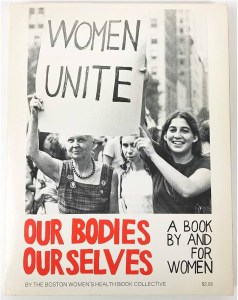
If we begin, as feminists must, with “our bodies, ourselves,” we recognize that all our knowledge, including our moral knowledge, is body-mediated knowledge. All knowledge is rooted in our sensuality. We know and value the world, if we know and value it, through our ability to touch, to hear, to see. Perception is foundational to conception. Ideas are dependent on our sensuality. Feeling is the basic bodily ingredient that mediates our connectedness to the world. … Failure to live deeply in “our bodies, ourselves” destroys the possibility of moral relations between us. …
… To respect feeling is not, as some nave suggested, to become subjectivistic. To the contrary, subjectivism is not the result of placing too much emphasis on the body and/or feeling. Subjectivism and moralism derive instead from evading feeling, from not integrating feeling deeply at the bodily level. This is not to suggest, however, that feelings are an end in themselves. We should never seek feelings, least of all loving feelings. Furthermore, the command to love is not now and never was an order to feel a certain way. Nor does the command to love create the power to feel love, and it was never intended to do so. Action does that. Feelings deserve our respect for what they are. There are no “right” and “wrong” feelings. Moral quality is a property of acts, not feelings, and our feelings arise in action. The moral question is not “what do I feel?” but rather “what do I do with what I feel?” Because this is not understood, contemporary Christianity is impaled between a subjectivist and sentimental piety that results from fear of strong feeling, especially strong negative feeling, and an objectivist, wooden piety that suppresses feeling under pretentious conceptual detachment. A feminist moral theology welcomes feeling for what it is — the basic ingredient in our relational transaction with the world.
The importance of all this becomes clear when we stop to consider the relation of our acts of love to our anger. It is my thesis that we Christians have come very close to killing love precisely because we have understood anger to be a deadly sin. Anger is not the opposite of love. It is better understood as a feeling-signal that all is not well in our relation to other persons or groups or to the world around us. Anger is a mode of connectedness to others and it is always a vivid form of caring. To put the point another way: anger is — and it always is — a sign of some resistance in ourselves to the moral quality of the social relations in which we are immersed. Extreme and intense anger signals a deep reaction to the action upon us or toward others to whom we are related.
To grasp this point — that anger signals something amiss in relationship — is a critical first step in understanding the power of anger in the work of love. Where anger rises, there the energy to act is present. In anger, one’s body-self is engaged, and the signal comes that something is amiss in relation. To be sure, anger—no more than any other set of feelings — does not lead automatically to wise or humane action. (It is part of the deeper work of ethics to help us move through all our feelings to adequate strategies of moral action.) We must never lose touch with the fact that all serious human moral activity, especially action for social change, takes its bearings from the rising power of human anger. Such anger is a signal that change is called for, that transformation in relation is required.
Can anyone doubt that the avoidance of anger in popular Christian piety, reinforced by a long tradition of fear of deep feeling in our body-denying Christian tradition, is a chief reason why the church is such a conservative, stodgy institution? I suggest, however, that while many of us actually hold out little hope for the moral renewal of the Christian church in our time, we are reluctant to face the cause of moral escapism in the church — namely, the fear of feeling and, more specifically, fear of the power of anger. We need to recognize that where the evasion of feeling is widespread, anger does not go away or disappear. Rather, in interpersonal life it masks itself as boredom, ennui, low energy, or it expresses itself in passive-aggressive activity or in moralistic self-righteousness and blaming. Anger denied subverts community. Anger expressed directly is a mode of taking the other seriously, of caring. The important point is that where feeling is evaded, where anger is hidden or goes unattended, masking itself, there the power of love, the power to act, to deepen relation, atrophies and dies.
Martin Buber is right that direct hatred (and hatred is anger turned rigid, fixated, deadened) is closer to love than to the absence of feeling.[21] The group or person who confronts us in anger is demanding acknowledgment from us, asking for the recognition of their presence, their value. We have two basic options in such a situation. We can ignore, avoid, condemn, or blame. Or we can act to alter relationship toward reciprocity, beginning a real process of hearing and speaking to each other. A feminist moral theology, then, celebrates anger’s rightful place within the work of love and recognizes its central place in divine and human life.
The Centrality of Relationship
The final and most important basepoint for a feminist moral theology is the centrality of relationship.
As a feminist moral theology celebrates the power of our human praxis as an intrinsic aspect of the work of God’s love, as it celebrates the reality that our moral-selves are body-selves who touch and see and hear each other into life, recognizing sensuality as fundamental to the work and power of love, so above all else a feminist moral theology insists that relationality is at the heart of all things.
… To speak of the primacy of relationship in feminist experience, and to speak of a theology of relation … is not to buy in on the latest capitalist fad. It is, above all, to insist on the deep, total sociality of all things. All things cohere in each other. Nothing living is self-contained; if there were such a thing as an unrelated individual, none of us would know it. The ecologists have recently reminded us of what nurturers always knew — that we are part of a web of life so intricate as to be beyond our comprehension.[22] Our life is part of a vast cosmic web, and no moral theology that fails to envisage reality in this way will be able to make sense of our lives or our actions today.
In a recent, powerful, and pioneering work that lays the groundwork for a feminist theology of relationship,[23] Carter Heyward has made clear how far traditional Christian theism has wandered from the central concern with relationality that characterized the faith of the Israelite community and that was so central to Jesus’ ministry. She stresses that the basic images of God that emerged in patristic Christianity were devoid of relationship. By stressing that God is “being itself” or is “the wholly other,” the Christian tradition implies that a lack of relatedness in God is the source of divine strength. And this image of divine nonrelatedness surely feeds images of self that lead us to value isolation and monadic autonomy. In our dominant theologies and intellectual traditions, do we not think of ourselves as most effective, most powerful as moral agents when we are most autonomous and most self-reliant, when we least need anyone else’s help or support? …
I submit that a theological tradition that envisaged deity as autonomous and unrelated was bound over time to produce a humanism of the sort we have generated, with its vision of “Promethean man,” the individual who may, if he chooses, enter into relationship. Where our image of transcendence is represented to us as unrelatedness, as freedom from reciprocity and mutuality, the experience of God as living presence grows cold and unreal. But even after such a God is long dead, the vision of the human historical agent as one who may, or may not, choose relationship lingers with us.
Such notions of love as also linger in a world like this — whether they are images of divine or of Promethean human love— are images of heroic, grand gestures of self-possessed people.
It is an image of patronizing love, the love of the strong for the weak, or, conversely, the sniveling gratitude of the weak toward those stronger who grant “favors.”
Never mind that none of us wants, or has ever wanted or needed, transactions with this sort of love. Never mind that we all know — unless our sense of self has already been twisted almost beyond human recognition by sadism and brutality – that the love we need and want is deeply mutual love, love that has both the quality of a gift received and the quality of a gift given. The rhythm of a real, healing, and empowering love is take and give, give and take, free of the cloying inequality of one partner active and one partner passive.
I shudder to think how many times during my years of theological study 1 came upon a warning from a writer of Christian ethics not to confuse real, Christian love with “mere mutuality.”[27] One senses that persons who can think this way have yet to experience the power of love as the real pleasure of mutual vulnerability, the experience of truly being cared for or of actively caring for another. …
To dig beneath this reified masculinist idolatry is also, I believe, to move toward a recovery of a New Testament ethos of faith. Can Jesus’ active embodiment of love be illumined by this image of mutuality? I believe it can. Orthodox Christological interpretations imply that somehow the entire meaning of Jesus’ life and work is to be found in his headlong race toward Golgotha, toward crucifixion — as if he sought suffering as an end in itself to complete the resolution of the divine human drama once and for all.[28] I believe that this way of viewing Jesus’ work robs it of its — and his — moral radicality. Jesus was radical not in his lust for sacrifice but in his power of mutuality. Jesus’ death on a cross, his sacrifice, was no abstract exercise in moral virtue. His death was the price he paid for refusing to abandon the radical activity of love –of expressing solidarity and reciprocity with the excluded ones in his community. Sacrifice, I submit, is not a central moral goal or virtue in the Christian life. Radical acts of love — expressing human solidarity and bringing mutual relationship to life — are the central virtues of the Christian moral life. That we have turned sacrifice into a moral virtue has deeply confused the Christian moral tradition.
Like Jesus, we are called to a radical activity of love, to a way of being in the world that deepens relation, embodies and extends community, passes on the gift of life. Like Jesus, we must live out this calling in a place and time where the distortions of loveless power stand in conflict with the power of love. We are called to confront, as Jesus did, that which thwarts the power of human personal and communal becoming, that which twists relationship, which denies human well-being, community, and human solidarity to so many in our world. … To be sure, Jesus was faithful unto death. He stayed with his cause and he died for it. He acceptedsacrifice. But his sacrifice was for the cause of radical love, to make relationship and to sustain it, and, above all, to righting wrong relationship, which is what we call “doing justice.” …
Mark the point well: We are not called to practice the virtue of sacrifice. We are called to express, embody, share, celebrate the gift of life, and to pass it on! We are called to reach out, to deepen relationship, or to right wrong relations — those that deny, distort, or prevent human dignity from arising —- as we recall each other into the power of personhood. We are called to journey this way, to stay in and with this radical power of love, When you do that for me, I am often overwhelmed by your generosity, and I may speak of the sacrifice you make for me. But we both need to be perfectly clear that you are not, thereby, practicing the virtue of sacrifice on me. You are merely passing on the power of love, gifting me as others have gifted you, into that power to do radical love.
Conclusion
There is much more to be said about the envisionment of the work of radical love within a feminist moral theology that takes its signals from what is deepest and best in women’s historical struggle. Certainly, more also needs to be said about the depth of sin and evil in the world. It is important to remember that a feminist moral theology is utopian, as all good theology is, in that it envisages a society, a world, a cosmos, in which, as Jules Girardi puts it, there are “no excluded ones.”[30] But feminist theology is also mightily realistic, in that it takes with complete seriousness the radical freedom we human beings have for doing good or evil. Since we acknowledge that we have, literally, the power to person-each-other into love — that is, into relationship— we can also acknowledge our power to obliterate dignity, respect, care, and concern for humanity from our world. All of that is within our power.
Far more than we care to remember, though, the evil that we do lives on, after us. The radicality of our vision of love gains its urgency from that very knowledge. The prophets of Israel were right to insist, long ago, that the sins of the fathers and the mothers) live on in us, corroding and destroying the power of relation. This is why our human moral task sometimes seems overwhelming. We live in a time when massive and accumulated injustice, acted out over time, encounters answer in the rising anger of those whose dignity and life are being threatened by collective patterns of privilege that have to be undone. In a world such as this, actively pursuing the works of love will often mean doing all we can to stop the crucifixions, resisting the evil as best we can, or mitigating the suffering of those who are the victims of our humanly disordered relations. In the midst of such a world, it is still within the power of love, which is the good news of God, to keep us in the knowledge that none of us were born only to die, that we were meant to have the gift of life, to know the power of relation and to pass it on.
A chief evidence of the grace of God—which always comes to us in, with, and through each other — is this power to struggle and to experience indignation. We should not make light of our power to rage against the dying of the light. It is the root of the power of love. …
After Mary Daly lectures—on those somewhat rare occasions when men are invited to attend — it often happens that the first questioner is a man who inquires, in a befuddled way, “What about men? What does this mean for us?” Since I do not share Mary Daly’s reverse Thomism[31]—that is, since I believe that the major differences between men’s and women’s behavior are rooted in culture and history rather than in a relatively fixed “nature”—I trust that my male readers will not at this point be suffering any confusion about what this essay means for them, It is not that it is wrong for any of us to ask: “What does all this mean for me?” That is a good question. But in a feminist moral theology, good questions are answered by something we must do. It is, I submit, urgent that men join women in doing feminist moral theology[32]—that is, acting to keep the power of relationship alive in our world—because men have more public power than women and because there is so much to be done.

But I do not wish to end on too sentimental a note about the relations of men and women in our world. Mary Daly had very good reasons for warning us women about the dangers of joining male-originated patriarchal processions. Since her diagnosis of the problem is so much on target, none of us must ever forget that, if we must join patriarchal processions in order to get on with the radical work of love, we had better be very sure that we invite a lot of our friends to come along.
Notes
*Author’s note: This essay is an expansion of my inaugural lecture as Professor of Christian Ethics at Union Theological Seminary in New York. Those who heard it in its original form in 1980 also witnessed an academic procession. On that occasion, however, the academic procession was planned to ritualize—that is, to express in embodied form—what I believe the work of radical love involves. It would be possible, in retrospect, to describe that procession in a way that would emphasize its similarity to other such academic processions. It could be reported merely that participating were faculty colleagues as well as representatives of the Board of Directors, distinguished clergy and lay leaders from a number of denominations and scholars from other seminaries and academic departments of religious studies. Yet those present, seeing and hearing my lecture, also saw a procession radically unlike most others of its genre because seventy percent of the marchers were women and most were arrayed in garb of breathtaking color. This essay is a slightly amended version of one that appeared in the Union Seminary Quarterly Review, vol. 36 Supplementary, 1981.
1. Mary Daly, Gyn/Ecology: The Metaethics of Radical Feminism (Boston: Beacon Press, 1978), pp. 30ff. Mary Daly’s work rightly has shaped most discussion and debate among women in theological and religious studies. Few, if any, male scholars seem to appreciate the importance of Daly’s critique of Christian theology as exemplary patriarchy, perhaps because it is easier to ignore her claims than to offer a serious rejoinder. I have chosen to take public issue with Daly here not to give aid and comfort to those who think her work “too angry” and “too man-hating” but because, with the publication of Gyn/Ecology, Daly enters directly into “metaethics,” or a discussion of the foundations of particular moral claims. It will not do, as Rebecca Porper did in Union Seminary Quarterly Review 35, nos. 1 and 2 (Fall, Winter 1979-1980), pp. 126-128, simply to treat the book as “beyond academic categories.” Many of Daly’s complaints about “methodolatry” in academia are on target, but she is also developing a substantive conceptual position herself, so her own method (consisting of operative assumptions and appeals for justification) deserves scrutiny. Daly is concerned about anti-intellectualism among women. It would be an exemplification of such anti-intellectualism not to hold her accountable for the factual and moral claims she makes or for her explicit or implicit methodological moves.
2. Daly, Gyn/Ecology, pp. 27-31.
3. My differences with Daly are numerous and beyond full classification here. Methodologically, I believe Daly has not repudiated adequately the extreme abstract rationalism of her Roman Catholic philosophical background, nor has she completed the shift from static ontic categories to the process categories she often celebrates. Carter Heyward is correct in claiming that Daly remains philosophically a subjective idealist. Carter Heyward, “Speaking and Sparking; Building and Burning,” Christianity and Crisis 39, no. 5 (2 April 1979), p. 69. I assume a connection between subjective idealism and the body/mind dualism of the western tradition. The test of one’s philosophical epistemology always becomes clear at the level of action. Idealism produces a critique of concepts, but it does not produce a historically concrete critique of institutions (that is, collective practice) or an alternative strategy for action. Even when Daly is correct about the depth of misogyny, her historical analysis of it lacks concreteness, nuance, and accuracy, and the book does not open the way to a strategy of change for a real, material world. It is not surprising that many begin to connect Daly’s position with the ancient Gnostic movements, which in their developed form became dualistic.
4. As noted above, the quality of Daly’s historical scholarship leaves much to be desired, especially in light of the growing amount of competent feminist research available on some of the historical periods about which she writes. Daly seems unwilling to draw on the work of distinguished women colleagues whose training is in historical scholarship and who are better able to do historical analysis. The record of women’s oppression is powerful enough, when carefully reconstructed, to ground Daly’s claims without recourse to casual and noncontextual historical judgments. Daly often rips historical materials out of their cultural context, as for example in condemning the practice of “African genital mutilation” without noting that male subincision rites are part of the same cultural practice, or in condemning both sides of the sometimes contradictory treatment women in the United States receive at the hands of gynecologists. The result of this has been that many of Daly’s critics have dismissed her substantive claims because of easily disputable historical overgeneralization.
5. Daly, Gyn/Ecology, pp. 413ff. As this manuscript was going to press, Mary Daly’s Pure Lust (Boston: Beacon Press, 1984) appeared. A perusal suggests that Daly has shifted her position somewhat from some of the views criticized here. This analysis was, of course, focused on Daly’s work through Gyn/Ecology.
6. I am assuming here that a “feminist moral theology’ arises from the in-depth experience of women’s struggle for life and from the consciousness that emerges through that struggle to live and to maintain a culture that expresses our lives. Such experience produces a critique of dominant, male-articulated Christian and secular theological, philosophical, and moral assumptions. I want to stress that for me biological gender does not ground this point of view; women’s historical struggle for life grounds it. I agree with Mary Daly that a feminist perspective — in this case a feminist moral theology — cannot assume the adequacy of any male notions of “reason” or “revelation.” However, since I am philosophically a dialectical materialist, I believe that critique of tradition equals transformation of tradition. The goal of a feminist moral theology, then, as Daly suggests, is to expose the death-dealing assumptions in the male articulated tradition. However, the death-dealing assumptions in the male-articulated tradition. However, contrary to Daly, I insist that women’s culture has also been alive and concretely implicated in the real historical past of existing religious communities. The goal is to break the male monopoly on past and present interpretation so as to thereby displace patriarchal (that is, idolatrous) tradition with a humanly inclusive one.
7. I want to stress the similarity of hermeneutical assumptions made by feminists and by other liberation theologians even though many male-articulated liberation theologies often relish misogynist and masculinist idolatrous assumptions. See, for example, Juan Luis Segundo, The Liberation of Theology (Maryknoll, N.Y.: Orbis Press, 1976), pp. 37-38, n. 55. Segundo would reserve the term “Christian” for the male element in revelation. From the standpoint of the method of feminist theology, it is well to remember that women are not a minority. This means that the liberation theologies of all communities and groups must be transformed by the experience of women in those groups. If the world survives at all, all theologies will be forced to the feminist assumption since women are the underclass within every historical group. However, this also means, as noted here, that the liberation of women is “the longest revolution.”
8. Roman Catholic theologian Mathew Fox has particularly stressed this theme of sensuality and spirituality. Happily, he notes the connection between feminist theology and the recovery of a spirituality of sensuality—Mathew Fox, On Becoming a Musical Mystical Bear (New York: Paulist Press, 1972), pp. ix-xxvi. He pursues this theme in other books, including A Spirituality Named Compassion (Minneapolis: Winston Press, 1979).
9. Sojourner Truth’s speech was recorded in History of the Women’s Suffrage Movement, vol, 1, reprinted in The Feminist Papers, ed. Alice Rossi (New York: Bantam, 1973), pp. 426-429.
10. Mary Daly, Beyond God the Father (Boston: Beacon Press, 1973), pp. 35, passim.
11. Susanne Langer, Mind: An Essay On Human Feeling, vol, 1 (Baltimore: Johns Hopkins University Press, 1967). Langer traces in minute detail the evolution of organic structure from invariant process to motivated act as the major transition point between mind and the rest of nature.
12. See “Sexism and the Language of Christian Ethics” in this book.
13. The best available study of the values and virtues intrinsic to a feminist ethic, which also stresses this nurturance theme, is Eleanor Humes Haney, “What Is Feminist Ethics: A Proposal for Continuing Discussion,” Journal of Religious Ethics 8, no. 1 (Spring 1980), pp. 115-124.
14. Nelle Morton, “The Rising of Women’s Consciousness in a Male Language Structure,” Andover Newton Quarterly 12, no. 4 (March 1972), pp. 177-19
15. The phraseology is from the Boston Women’s Health Collective, Our Bodies, Ourselves (New York: Simon and Schuster, 1973). This work has been one of the most powerful influences in transforming women’s self-understanding during the past decade.
16. An important work that elaborates this theme is James B. Nelson, Embodiment: An Approach to Sexuality and Christian Theology (Minneapolis: Augsburg Press, 1979).
17. See especially Rosemary Ruether, New Woman: New Earth (New York: Seabury Press, 1975).
18. See especially Tom F. Driver, Patterns of Grace: Human Experience As Word of God (New York: Harper and Row, 1977). Recognition of the problem is also receiving attention in the works of theologians such as Charles Davis and Harvey Cox and, as noted above, Matthew Fox.
19. Happily, a few recent works by male colleagues in Christian ethics stress the importance of body and feeling in moral epistemology in a way consonant with my thesis here. See Embodiment, James B. Nelson and Daniel Maguire, The Moral Choice(New York: Doubleday, 1978).
20. See Haney, “What Is Feminist Ethics,” and Anne Kent Rush, Getting Clear: Body Work for Women (New York: Random House, 1972).
21. Martin Buber, I and Thou, trans. Walter Kaufmann (New York: Scribner’s, 1970), pp. 67f.
22. See, for example, Barry Commoner, The Closing Circle (New York: Knopf, 1971).
23. Carter Heyward, The Redemption of God: A Theology of Mutual Relation (Washington, D.C.: University Press of America, 1982).
24. John R. Wikse, About Possession: The Self as Private Property (University Park, Pa.: The Pennsylvania University Press, 1977).
25. Wikse, About Possession, pp. 44-45.
26. Wikse, About Possession, pp. 12-13.
27. A major source for the deprecation of mutuality in Protestant Christian ethics was Anders Nygren’s study Agape and Eros(Philadelphia: Westminster Press, 1953). Among those who followed Nygren was Reinhold Niebuhr. See Gene Outka, Agape: An Ethical Analysis (New Haven: Yale University Press, 1972), PP. 7-92. An early critique of Nygren never adequately appropriated was Daniel Day Williams, The Spirit and Forms of Love (New York: Harper and Row, 1968). Roman Catholic writers have usually included a more positive role for mutuality in ethics than have Protestants, but the critique of sacrifice proposed here is relevant to Roman Catholic writers.
28. For an excellent critique of orthodox christologies, see Heyward, The Redemption of God, and Dorothee Sölle, Christ the Representative (Philadelphia: Fortress Press, 1967) and Political Theology (Philadelphia: Fortress Press, 1974).
29. Adrienne Rich, Lies, Secrets and Silence (New York: Norton, 1979).
30. Jules Girardi, “Class Struggle and the Excluded Ones,” trans. and distributed by New York Circus, from Amor Cristiano y Lucha de Classes (Sigueme, Spain, 1975).
31. Thomas Aquinas argued, following Aristotle, that male and female “natures” differed because biological structure differed. This two natures idea runs deep in Christian theology. Daly has, of course, reversed the traditional argument, making women alone expressive of full rationality. She continues the traditional dualism, however.
32. Within a liberation theology method, “thinking” or “reflection” is, of course, a moment within praxis. We “do” theology, which includes our naming, interpretation, and analysis of our world, in the process of acting to change it in a life-giving direction.

