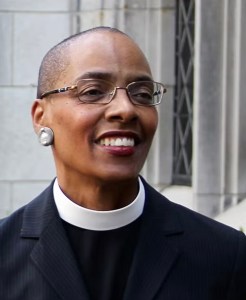
Theologian and Episcopal priest Kelly Brown Douglas (1957- ) wrote this essay when the project of womanist theology was still in its early years of development. “Womanism” as a term, attitude, and program developed in association with the writings of Alice Walker (in particular the writings collected in In Search of Our Mothers’ Gardens) and the theological implications were drawn out by Black North American theologians beginning in the 1980s. Key pioneers and collaborative partners included Katie Geneva Cannon, Delores Williams, Renita Weems, Jacquelyn Grant, and Emilie Townes. As Douglas explains in this piece, womanism responded to the lived experience and calling of African American Christian women for whom the liberation theory and praxis of Black theology and a mostly white-oriented feminist theology were, at one and the same time, promising but ultimately insufficient.
SOURCE: Source: Kelly Brown Douglas, “Womanist Theology: What is its Relationship to Black Theology?” in James H. Cone and Gayraud S. Wilmore, eds., Black Theology: A Documentary History, Volume II, 1980-1992 (Maryknoll, New York: Orbis Books, 1993).
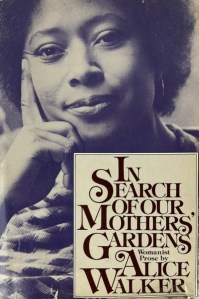
Black women in the United States have given voice to a new theological perspective: womanist.[1] Although the meaning of the term “womanist” originated with Alice Walker’s interpretation of the Black cultural expression, “You acting womanish,” it goes beyond her words.[2] It points to the richness and complexity of being Black and female in a society that tends to devalue both Blackness and womanhood. Womanist symbolizes Black women’s resistance to their multidimensional oppression as well as their self-affirmation and will to survive with dignity under dehumanizing social-historical conditions.[3] The use of the term womanist in religious and theological scholarship signals understandings of the Bible, various church communities, and God that have emerged from the social-historical contexts of Black women struggling to survive and be free.[4]
As Black female theologians work to bring womanist theology to fruition, they have encountered many questions. One such question is: What does womanist theology have to do with Black theology? This concern to clarify the relationship between the two theologies often stems from the recognition that various womanist theologians began their theological reflection through the crucible of Black theology.[5] Any attempt, therefore, to discern what womanist and Black theology have to do with each other must engage at least two issues: (1) the role Black theology played in the emergence of womanist theology and (2) the similarities and differences between the two theologies. This article represents one womanist theologian’s attempt to address these two concerns.
The Role of Black Theology
My own journey from Black to womanist theology is suggestive of Black theology’s role in the emergence of womanist theology, James Cone’s book, A Black Theology of Liberation was my introduction to systematic theological reflection.[6] This book entered my life as I was struggling to understand the connection between my Blackness and my Christian faith. I wanted to know if the God of Jesus Christ was for or against Black liberation. Cone’s book answered this question for me. It related God and Christ to the Black freedom struggle in a way I have never considered. It argued that the Christian God was on the side of the oppressed as they fought for justice. This meant that in a White racist society, that is, the United States, God and Christ were Black.
Reading Cone’s book plucked a chord within me that changed my life. Empowered by the God of the oppressed I was able to fight against White racism with a firm and determined resolve. The image of a Black God gave me a new sense of pride in my own Blackness. After reading A Black Theology of Liberation I was compelled to pursue further theological study.
Black theological reflection sustained me for some time as I attempted to engage in a liberating praxis for the Black community. But as I developed an awareness of what it meant to be a woman in a sexist society I saw the limitations of the Black God and Christ.
The emergence of feminist theology, with its penetrating critique of patriarchy within the religious and secular realm, helped me to name the discriminatory treatment I encountered from many of my Black male colleagues. It was sexism. I became painfully aware that sexism was not just a “White woman’s thing.” It also pervaded the Black church and community. This meant that if the entire Black community was to be free, both racism and sexism, at the very least, had to be eradicated.
Shaped by the Black Power/civil rights movement out of which it emerged, Black theology focused only on one dimension of Black oppression – White racism. Its failure to utilize Black women’s experience further prevented it from developing an adequate analysis of Black oppression. It did not address the multiple social burdens, that is, racism, sexism, classism, and heterosexism, which beset Black men and women. Consequently, it presented an image of God and Christ that was impotent in the fight for Black freedom. A Black God, one concerned only with the battle against racism, could not sustain and liberate the entire Black community. This God could not affirm or empower Black women as they confronted sexism. My recognition of Black theology’s limitations set me on a quest for a theology more reflective of Black women’s as well as men’s efforts to “make do and do better.”
What does my particular journey suggest about Black theology’s role in the emergence of womanist theology? It points first to the significant role that Black theology has played in giving Black women and men access to systematic theological reflection. Black theology let it be known that God did speak through the Black community. The strident articulation of a Black God and Christ made clear that the Black story of suffering and struggle was God’s story, and this is a story necessary to tell. Black theology opened the door for Black people to further explore the richness of their own experience in their efforts to understand the meaning of God’s presence in human history. Essentially, Black theology laid the groundwork for the emergence of various theological voices from the Black community, including womanist voices.
My journey further points out how Black theology’s failure to address sexism has contributed to the emergence of womanist theology. Affected both by the feminist movement in church and society, and their own experience of sexism, various Black women began to note the exclusion of Black women’s experience in Black theology. In one of the earliest critiques of Black theology by a Black woman, Jacquelyn Grant observed that Black theologians had not seriously addressed the issue of sexism. She pointed out that although Black theologians claimed to write from the vantage point of the total Black experience, Black women were “invisible” in Black theology.[7] As Black female theologians began to recognize the inadequateness of Black theology in relation to their struggles, they endeavored to develop a more inclusive theological perspective. They soon gave voice to the womanist perspective. Womanist theology has emerged partly because of Black theology’s failure to address the concerns of Black women.
Essentially, the role of Black theology in the emergence of womanist theology is twofold. First, by linking God to the Black experience Black theology gave Black women access to systematic theological reflection. Second, by ignoring Black women’s experience Black theology forced Black women to develop their own theological perspective.
Let us now turn to what a womanist theology involves. Special attention will be given to its distinctiveness in relation to Black theology.
The Distinctiveness of Womanist Theology
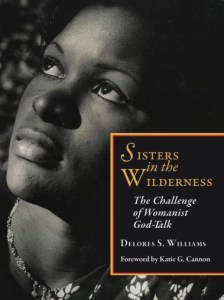
The most obvious distinction between Black and womanist theology is their respective points of departure. While Black theology’s starting point – the Black experience — does not include Black women’s experience, womanist theology begins with Black women’s story of struggle. Womanist theology reflects at least two aspects of that story: first, the complexity of Black women’s oppression and second, Black women’s resolute efforts to survive and be free from that oppression. Specifically, it confronts Black women’s struggles within the wider society as well as within the Black community. It also affirms Black women’s faith that God supports them in their fight for survival and liberation. This means that a womanist theology engages a social-political analysis of wholeness and a religio-cultural analysis.
A Social-Political Analysis of Wholeness
Black women’s status in the feminist and Black freedom movements illustrates the peculiar social-historical reality associated with being Black and male in the United States, and hence, reveals the need for womanist theology include a social-political analysis of wholeness. Let us first look at Black women in relation to the feminist struggles, that is, the women’s movements.
Black women have consistently recognized that their freedom was not a priority of the two women’s movements- traditionally dominated by White women -that have emerged in the United States. Both movements have been limited by a racial bias. Bell Hooks emphatically states, “Every women’s movement in America from its earliest origin to the present day has been built on a racist foundation.”[8]
The first distinctive women’s liberation movement in America evolved out of abolitionism. These early feminists were struggling against what has become known as the Victorian idea of womanhood that undergirds patriarchy. This idea not only relegated White middle-class women to the domestic realm, but it also considered them fragile “dolls” who had to be placed upon a protective pedestal. Eventually the nineteenth-century fight against Victorian ideology centered on a concern for women’s suffrage.
As White women fought for the right to vote, their concern for “women’s rights” did not cross the barriers of race. They did not seem interested in the plight of their Black sisters. The White suffragettes did not acknowledge that most Black women’s lives were not representative of the Victorian ideal of womanhood. Cheryl Townsend Gilkes aptly points out, “The realities of slavery guaranteed … that Black women were never treated as white women were. Black women were overworked, flogged and otherwise exploited, just like men?”[9] The suffragettes’ almost total disregard for the peculiar plight of Black women was evidenced during the 1848 Seneca Falls women’s rights convention. The convention documents did not make “even a passing reference to Black women.”[10]
In addition, the White suffragettes were disinterested in eliminating racial identification as a requirement for voting. They appeared unconcerned that racial bias, even without gender bias, would still keep their sisters of color disenfranchised.
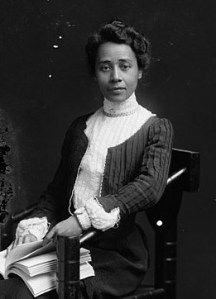
Anna Julia Cooper, 1858-1964
Some antebellum Black women were very aware of their peculiar status. They realized that because they were “women,” they too needed to affirm and claim the women’s suffrage movement. But they also recognized that because they were Black, they could not ignore the issue of race. Black women such as Sojourner Truth and Maria Stewart involved themselves in both the women’s movement and the abolitionist movement, though they knew that their status as Black and female meant they would have to defend their right to participate in either movement. Anna Julia Cooper put it best when she said, “The colored woman of to-day occupies, one may say, a unique position in this country. … She is confronted by both a woman question and a race problem, and is as yet an unknown or acknowledged factor in both.”[11]
Unfortunately the contemporary women’s movement was no less characterized by a lack of concern for Black women than the nineteenth-century suffrage movement. Similar to the earlier suffrage movement this movement also emerged out of the struggles for racial justice. As White women, especially middle-class college women, “gained experience in collective organizing” through their involvement in the Black protests, and confronted gender discrimination within the civil rights movement, they were radicalized to fight for their rights within American society. This fight was characterized by the struggle against the same patriarchal order that had earlier deprived women of voting privileges. They demanded freedom from their exile in the domestic realm and access to the male-dominated social-political realm.
White women’s narrow focus on patriarchy continued to reflect their disinterest in Black women’s freedom. Their focus led some Black women to claim, “feminism is a white female thing that has nothing to do with black women.”[12] There were, in fact, few indications that the contemporary women’s movement was other than a “white female thing.” With particular reference to the book by Betty Friedan that for some symbolized the contemporary women’s movement, The Feminine Mystique (1963), Bell Hooks said that White women’s fight for freedom from the private sector ignored “who [poor Black women] would be called in to take care of the children and maintain the home if they [white men] were…. given access with White women to the professions.[13] Hooks further observed that the focus on patriarchy “deflected attention away from [white women’s] classism … racism and sexist attitudes towards the masses of American women … concerned about economic survival, ethnic and racial discrimination.”[14]
The contemporary women’s movement’s tendency to ignore issues of race only heightened Black women’s suspicion that this movement was designed to distract from the fight against racism. One Black woman put it this way, “[the women’s movement] is just a bunch of bored white women with nothing to do – they’re just trying to attract attention away from the black liberation movement. “[15] In addition to their suspicion of White women’s motives, Black women rejected the women’s movement because they did not want to participate in any movement that had the potential of pitting them against Black men. The well-known poet Gwendolyn Brooks said this: “Black women, like all women, certainly want, and are entitled to, equal pay and privileges. But black women have a second ‘twoness.’ Today’s black men, at last flamingly assertive and proud, need their black women beside them, not organizing against them.”[16]
Given their apprehensions, many Black women refused involvement in the women’s movement. They opted to put most of their energy and talents into the Black freedom struggle. For these women it was important that the Black community be one in its quest for freedom.
What was Black women’s status in the Black freedom struggle? Many of the African-American women involved in this struggle soon discovered that the civil rights/Black Power movement was as sexist as the women’s movement was racist. Although Black women helped found some of the freedom fighting organizations, spearheaded local protest activities, and risked their lives for the Black community’s freedom, they were rarely afforded the opportunity to hold national leadership roles or have decision-making responsibilities within various organizations.
Moreover, the Black freedom struggle began to equate freedom from racism with Black men securing their men’s rights to be “men.” But these women soon reevaluated their position when their men’s treatment of them made it evident that “manhood” was being defined “within paradigms constructed by white patriarchy.”[17] Just as they realized that their freedom was not a priority of the White-dominated women’s movement, Black women discovered that they could not obtain their freedom through the male-dominated civil rights/Black Power movement.
Black women’s relationship to the women’s and Black freedom movements points to what Alice Walker describes as a womanist’s commitment “to the survival and wholeness of the entire people.”[18] Black women apparently evaluated and related to these movements according to whether or not they promoted freedom for both them and their men. They were also reluctant to be a part of any movement that created hostilities and divisions between them and Black men. Black women were searching for a politics of “wholeness.” They needed a political strategy that would insure Black people, men and women, rights to live as whole, that is, free, human beings and that would keep the Black community whole, that is, unified, struggling together to survive and be free in relationships of mutuality. What does this aspect of Black women’s experience mean for a womanist theology?
Unlike Black theology, a womanist theology will not focus on only one aspect of Black oppression. Instead, it will engage a social-political analysis of “wholeness.” This analysis is one which is not only multidimensional, but also bifocal. It will confront racism, sexism, classism, and heterosexism as they impinge the Black community, and also as they are manifested within that community. A social-political analysis of wholeness will not seek to give priority to different forms of oppression, or to pit women against men or the poor against the rich. It will seek to eliminate anything that prevents Black people from being whole, liberated people, and from living as a whole, unified community. For instance, while affirming Walker’s observation in her womanist definition that “the colored race is just like a flower garden, with every color flower represented,” womanist theology recognizes that one of the vestiges of racism in the Black community is “colorism.”[19] Black people have oftentimes discriminated against one another based on each other’s light or dark-skinned complexion. A social-political analysis of wholeness will confront this vestige of racism within the Black community just as it will confront the presence of gender, sexual or economic oppression within the community. Essentially, a social-political analysis of wholeness will help womanist theology to make clear that the Black community is not free if any of its members are “unfree” because of their color, gender, sexual preference or economic condition.
What does Black women’s quest for wholeness imply about the meaning of God’s presence for the Black community? Black women have been resolute in their belief that God is on their side in their struggle. Maria Stewart, for instance, revealed this faith when she proclaimed (alluding to Scripture as she frequently did), “the God in whom I trust is able to deliver me from the rage and malice of my enemies, and from them that rise up against me.”[20]
A God on the side of Black women is one who not only liberates the Black community from the multidimensional oppression that besets it, but also brings judgment against the Black community for harboring within it any kind of oppression. Womanist theology, therefore, must go beyond the God of Black theology. It must emphasize God’s role not just as liberator but also as judge. It must highlight the God of the Old Testament prophets. This God not only liberated Israel from Egyptian bondage, but also demanded that Israel eradicate from its community anything that kept it a divided community, and hence, caused one member of the community to be oppressed by another member of the community.
In sum, if womanist theology is to reflect Black women’s struggle for liberation, it must engage a social-political analysis of wholeness and emphasize God’s role in the movement toward wholeness.
A Religio-Cultural Analysis for a Spirituality of Survival
Not only has Black women’s experience been characterized by their complex and determined struggle for freedom, but most significantly by their ability to survive with dignity in spite of demeaning social-historical circumstances, and their extraordinary commitment to the survival of their families. Historically, they did not acquiesce to an ideology that negated their womanhood. They also did not stand by and allow their children to be destroyed by a system that used them as chattel. Instead, they stridently affirmed their womanhood and consistently sought ways to help their families make it from one sunup to another sunup. The most poignant example of a Black woman’s refusal to consider herself less than a “whole” woman is Sojourner Truth’s much quoted speech, “Ain’t I A Woman”: “That man over there says that women need to be helped into carriages, and lifted over ditches, and to have the best place everywhere. Nobody ever helps me into carriages, or over mudpuddles, or gives me any best place! And ain’t I a woman! Look at me! Look at my arm! I have ploughed and planted, and gathered into barns, and no man could head me! And ain’t I a woman? I could work as much and eat as much as a man – when I could get it — and bear the lash as well! And ain’t I a woman? I have borne thirteen children, and seen them most all sold off into slavery, and when I cried out with my mother’s grief, none but Jesus heard me! And ain’t I a woman?”[21]
Slave narratives provide numerous examples of the ingenious means Africa American women utilized to help their children survive. One such narrative relates the following: “As we went out in the morning, I observed several women who carried their young children in their arms to the field. These mothers laid their children at the side of the fence, or under the shade of cotton plants, whilst they were at work; and when the rest of us went to get water, they would go to give suck to their children, requesting someone to bring them water in gourds, which they were careful to carry to the field with them. One young woman did not, like the others, leave her child at the end of the row, but had contrived a sort of rude knapsack, made of a piece of coarse linen cloth, in which she fastened her child, which was very young, upon her back, and in this way carried it all day, and performed her task at the hoe with the other people.”[22]
What is it that has allowed Black women to transcend the negative, dehumanizing images that society has maintained of them? What has undergirded their fight, against numerous odds, to save their children. What has fostered Black women’s relentless struggle to survive and to sustain their families?
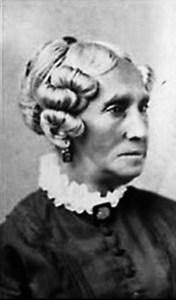
Maria W. Stewart, 1803-1879
The lives and words of Black women point to a “spirituality of survival” that they have nurtured and by which they have been strengthened. There are at least two aspects to this spirituality of survival: it fosters self-esteem and it affirms the presence of God in the day-to-day struggle for survival. Maria Stewart illustrates the characteristic features of a spirituality of survival when she exhorts various Black audiences to take responsibility for their survival and liberation. During her exhortations she often told her audience about their rich African heritage. She said: “History informs us that we sprung from one of the most learned nations of the whole earth, from the seat, if not the parent of science. Yes, poor despised Africa was once the resort of sages and legislators of other nations, was esteemed the school of learning, and the most illustrious men in Greece flocked thither for instruction.”[23]
In addition, she frequently reminded her audiences that though the world considered them inferior, God did not. She told them that they were children of God, made in God’s own image. She put it this way: “Many think, because your skins are tinged with a sable hue, that you are an inferior race of beings, but God does not consider you as such. He [sic] hath formed and fashioned you in his [sic] own glorious image, and hath bestowed upon you reason and strong powers of intellect.”[24]
Stewart apparently understood that if an oppressed people have a pride in their own culture and historical heritage, as well as a knowledge that they are children of God, then they will not be as vulnerable to the oppressive structures, systems, and ideologies that attempt to convince them that they are nobody and that their lives are not worth living.
Not only did Stewart attempt to foster self-esteem when she spoke to Black people but she consistently reminded them that they were not alone in their daily struggle. Using herself as an example she told one audience: “The frowns of the world shall never discourage me, nor its smiles flatter me; for with the help of God, I am resolved to withstand the fiery darts of the devil, and the assaults of wicked men.”[25]
Stewart illustrates how Black women have believed that God, especially God’s presence as the Holy Spirit, has been with them to shield them and their community from death and destruction. These women frequently testified that the Holy Spirit upheld them in their daily efforts to keep going. Their belief in the sustaining presence of God’s spirit is perhaps indicative of what Alice Walker means when she says that a womanist “loves the spirit.”[26]
What does the significance of spirituality of survival for Black women mean for the doing of a womanist theology? It means that womanist theology, again unlike Black theology, will engage in a religio-cultural analysis. This analysis will highlight those aspects of Black culture and religion that foster self-esteem for Black women as well as men, and that help them to transcend the negative images of themselves that a racist, sexist, classist and heterosexist society pro-jects. This analysis will also confront those aspects of Black culture and religion that mitigate self-esteem and transcendence. Essentially, a religio-cultural analysis will point to the necessity of a spirituality of survival for the Black community.
Given Black women’s ability to survive and their active commitment to their families’ survival, womanist theology will be more than a liberation theology. It will highlight God’s role as a sustainer of the oppressed. It will examine the sustaining presences of the Holy Spirit in Black women’s lives. Womanist theology will emphasize God’s role in the Old Testament Exodus event, not just as liberator but as sustainer. It will focus, for instance, on God’s presence in the lives of the two midwives, Pharaoh’s daughter, Moses’ sister and mother as they worked to insure baby Moses’ survival.
Such utilization of Black women’s experience in doing theology, graphically illustrates the ways in which womanist theology is distinct from Black theology. Both theologies are concerned with the Black community’s freedom and God’s role in their freedom struggle. Womanist theology, however, goes beyond Black theology. It highlights the community’s daily struggle to survive. It also utilizes more comprehensive analyses for understanding the Black community’s struggle. The current challenge is for Black female theologians to move forward with the task of bringing womanist theology to fruition.
Notes
1. From here on any reference to Black people will mean those in the United States unless otherwise designated.
2. Alice Walker, In Search of Our Mothers’ Gardens (San Diego, Calif.: Harcourt Brace Jovanovich, 1983), pp. xi-xii.
3. I have expanded on this understanding of the womanist symbol in “God Is As Christ Does: Toward a Womanist Theology,” Journal of Religious Thought 46, no. 1 (Summer-Fall, 1989), 7-16. Some of the history in this paper concerning Black women’s involvement in the women’s movement is also adapted from that article.
4. See for instance Katie Geneva Cannon, “The Emergence of Black Feminist Consciousness,” in Feminist Interpretation of the Bible, ed. Letty Russell (Philadelphia: Westminster Press, 1985), and Womanist Ethics (Ithaca N.Y.: Scholars Press, 1988); Toinette M. Eugene, “Moral Values and Black Womanists,” Journal of Religious Thought 44 (Win-ter-Spring, 1988), 23-34 (reprinted in this volume as Document 23); Cheryl Townsend Gilkes, “The Role of Women in the Sanctified Church,” Journal of Religious Thought43 (Spring-Summer, 1986), 24-41; Jacquelyn Grant, “Womanist Theology: Black Women’s Experience as a Source For Doing Theology, with Special Reference To Christology,” Journal of the Interdenominational Theological Center 13 (Spring 1986), 195-212 (reprinted in this volume as Document 20); Renita Weems, Just A Sister Away: 4 Womanist Vision of Women’s Relationships in the Bible (San Diego: Lura Media, 1988); Delores S. Williams, “Womanist Theology: Black Women’s Voices,” Christianity and Crisis (March 2, 1987), 66-70 (reprinted in this volume as Document 19).
5. For instance Jacquelyn Grant and I both completed our doctoral work under the guidance of Black theologian, James H. Cone. I will say more about this in relation to my particular journey to womanist theology.
6. James H. Cone, A Black Theology of Liberation, 2nd ed. (Maryknoll, N.Y.: Orbis Books, 1986).
7. Jacquelyn Grant, “Black Theology and the Black Woman,” in Gayraud Wilmore and James H, Cone, eds., Black Theology: A Documentary History, 1966-1979 (Maryknoll, N.Y.: Orbis Books, 1979), 418-433.
8. Bell Hooks, Ain’t I A Woman: Black Women and Feminism (Boston: South End Press, 1981), 124.
9. Cheryl Townsend Gilkes, “The Role of Church and Community Mothers: Ambivalent American Sexism or Fragmented African Familyhood,” Journal of Feminist Studies in Religion (Spring 1986).
10. Angela Davis, Women, Race, and Class (New York: Random House, 1981), 57.
11. Anna Julia Cooper, A Voice From the South: By A Black Woman of The South (1892; reprint, New York: Oxford University Press, 1988), 134.
12. Cited in Helen King, “The Black Woman and Women’s Lib,” Ebony (March 1971).
13. Bell Hooks, Feminist Theory: From Margin to Center (Boston: South End Press,
1984), 1.
14. Ibid., 2.
15. King, 70.
16. Ibid., 71.
17. Bell Hooks, Talking Back: thinking feminists, thinking black (Boston: South End Press, 1989), 178.
18. Walker, xi.
19. Ibid., xi.
20. Maria W. Stewart, America’s First Black Woman Political Writer: Essays and Speeches, ed. Marilyn Richardson (Bloomington, Ind.: Indiana University Press, 1987),
21. Cited in Feminism: The Essential Historical Writings, ed. Miriam Schneir (New York: Vintage Books, 1972), 93.
22. Charles Ball, Slavery in the United States: A Narrative of the Life and Adventures of Charles Ball, A Black Man (Lewiston, Pa.: J. W. Shugert, 1836), 150-151, quoted in Black Women in White America: A Documentary History, ed. Gerda Lerner (New York: Pantheon Books, 1972), 48.
23. Richardson, 58.
24. Ibid., 29.
25. Ibid., 50.
26. Walker, xii.

