Many years ago I had an informative conversation with a senior editor at an established, church-related academic publishing house. We were talking about the prospects for publishing texts to support teaching in my field—historical theology, and specifically the global history of Christianity. The editor represented the view of his firm at that time: What was wanted was something quite short: a summary or overview. Something broadly accessible and easily digestible. Tell us the story in brief. That’s a book we can sell; for that, we can find a ready market.
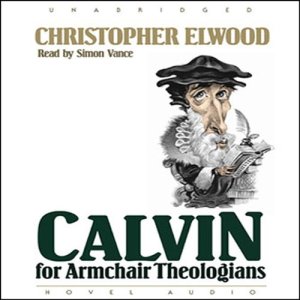
I get it. People are busy. Even those many years ago, readers, including student readers, were wanting their information compressed, digested. The culture of information has progressed since then to the point where we suspect that fewer and fewer of us retain the patience for demanding reading. I myself, as an author, have participated in the dynamic—producing A Brief Introduction … as well as a short (and thoroughly illustrated!) introduction for busy people who imagine themselves “armchair theologians.”
The collection of readings on this site stands as something of a counterweight to the more popular trend. Here I have gathered documents, texts—as we say in the business, “primary sources”—that are, to some degree, the basic elements, the evidentiary basis, for thinking about the history of Christian experience in the modern period (roughly 1500 to the present).
If these readings were published together as a book, we might call it an anthology of readings in the history of modern Christianity or a “documentary history.” Utilizing a documentary approach to exploring history seems old fashioned. Who has time for all that consumption of words and uninterpreted ideas? The publishers tell me that most people with interest in the subject would prefer an expert to do the initial consumption. Then, having feasted and converted the subject to a usable, essential nutrient, let them deliver us the story as they think we should hear it. Above all, briefly!
You may be like the larger herd who want the armchair version. Or you may decide to press on through the readings gathered in this collection. If you persist in a contradiction of the publishers’ expectations for contemporary readers and students, I suspect it will be partly owing to your curiosity. You want to see how the historians and historical theologians come up with their interpretations, the ones that underlie the stories they tell us. Alternatively, you might persist because your fate has sentenced you to academic service under the tutelage of a teacher who demands that you yourself undertake the work of interpreting. That is to say, you have taken a course in which primary source readings—more or less direct historical evidence from the time periods you are studying—form a basis for judgements and interpretations you yourself are required (and empowered!) to make. [You might or might not be pleased to know that “fate” is read theologically (at least in Calvinistically-inclined environments) as “providence”; and your experience is more “ordained” than it is a burdensome “sentence.” Theology can turn many a frown upside down.] If your teacher is not a sadist (let us, for now, assume the best), they may believe that the sort of direct encounters you have through these readings are the means through which your skills of interpretation are honed; and that these are skills that serve us much more broadly—vocationally—than we might at first expect.

Needless to say, the course of readings offered here is neither a brief approach to the history of modern Christian movements, nor is it fast. In fact it is quite slow.
Slowing down, attending directly and closely, deliberating, generating our own distinctive questions, training ourselves in the carefully reflective work of historical, theological, and moral interpretation: these processes and practices are, I think, rarer things in today’s world. To try to create space for slower, and consequently deeper, exploration of the shapes of Christian and other religious-spiritual witness as these have developed across time and in a variety of cultural settings—to work for such room is itself a form of countercultural witness. And one may find, just possibly, that as academic practice, the slowness of our reading into a range of primary sources representing the varieties of modern Christian experience expands and deepens within us a spiritual (which is to say more-than-merely-intellectual) capacity for openness to growth and genuine encounter with our neighbors and others—and with the Mystery who brings us to and accompanies us in this work.

