The three readings for this session afford a glimpse of reforming movements that, in some sense, took their cue from the efforts of Martin Luther and others in Germany, but each developed some distinctive traits that came to mark them off from Lutheranism.
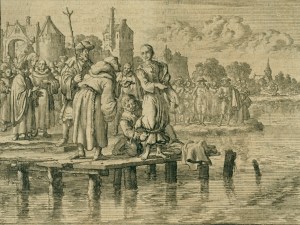
The first selection is the Schleitheim Articles (or Confession), written by Michael Sattler (1490-1527) and adopted in 1527. It is the first comprehensive statement of belief and practice by a group of Christians who came to be called Anabaptists. Anabaptists are representatives of the so-called Radical Reformation—a loose collection of reform-minded Christians who, for various reasons, did not believe that the “magisterial” reformers (Luther, Huldrych Zwingli, John Calvin, and others) went far enough in the effort to authentically reform or restore the church of Christ. Sattler was an Anabaptist pastor who had once been a Benedictine monk. He died as an Anabaptist martyr, convicted and executed for holding and propagating heterodox views. As you read the Schleitheim Articles, ask yourself what elements in this statement might distinguish Anabaptists from Luther and his followers.
The second selection comes from the French Reformer John Calvin (1509-1564), whose ministry took place primarily in the city of Geneva. His Institutes of Christian Religion (in four books) was one of the most influential compendiums of Christian thought produced in the reformation era. It became the standard theological textbook for Christians who came to be called Reformed Protestants. The selection you are given is not from the Institutes, but rather from a shorter work, a treatise on the eucharist or Lord’s Supper that Calvin wrote to clarify his distinctive interpretation, in a time of significant and often troubling division over the meaning and practice of this sacrament. The reading comes with an introduction. As you read the selection, think about how Calvin’s thinking on the sacrament positions him in relation to the theology of grace expressed by Luther and the theologies of grace for which loyal Catholics of his time argued. Think also about how his position might locate the church he sought to build in relation to the claims of Anabaptists inspired by the Schleitheim Articles.
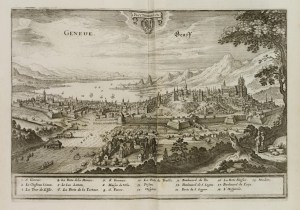 The final selection is from the Register of the Consistory of Geneva in the time of Calvin. These are minutes from the Board of Elders of Geneva that was set up (beginning in 1542) to deal with any problems in the life of the church of Geneva and its members. It’s worth noting that “members of the church” more or less coincided with “residents or inhabitants of Geneva” in the period we are concerned with. The Board of Elders, together with the city’s pastors, met regularly (usually, every Thursday evening) to examine persons who had been summoned because of reports of problematic behavior. Because these are minutes, you may have to work a little to figure out what issues have led to the summoning. But try to figure out what the pastors and the elders are concerned about, as well as what the reported remarks of the laypeople who speak “through” these registers convey about what they think and believe. Also think about what you can divine from this source about the challenges involved in the reform effort of Calvin and other reformers in sixteenth-century Europe.

