In the post-second world war period, migration of people from the Middle East and South Asia to Christian-dominant countries (in Europe and North America) produced a need in those countries for reconsideration and renegotiation of cultural and religious identity. With a rapid rise in the number of Muslims in Europe and in North America, the status and meaning of Islam for an experience of and commitment to such movements as political-economic liberalism, secularism, and pluralism became a question raised in public discourses, but it also provoked self-reflection for migrant and minority communities. Western scholars with roots in the Middle East helped to unpack a western history of “othering” Muslims and Islam (see Edward Said’s Orientalism, 1978), in a way that threatened to relegate Muslims in the West to the status of permanent outsiders. The term “Islamophobia” helped name a social and cultural phenomenon, exacerbated by the Al-Qaeda attacks of September 11, 2001, whereby Islam and Muslims were seen as the engine and the tools of violence and terror.
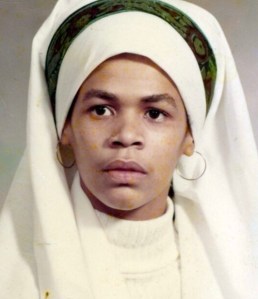
The interview excerpted here was produced in the period after those attacks as part of an American news organization’s attempt to grapple directly and more deeply with the nuances of Islam globally but also in the West. Dr. Amina Wadud (1952- ), an American and Islamic scholar of Islamic history and theology with a concentration on the position of women in Islam, spoke to broad questions of identity but also to programs of reform undertaken by committed interpreters of the traditions of Islam. Dr. Wadud is among the founders of the organization Sisters in Islam, first organized in Malaysia, and combines scholarly, theological, and activist-reformist work, particularly in behalf of justice for and inclusion of women.
SOURCE: PBS Frontline: Interviews with Muslim Scholars: Interview with Amina Wadud, March 2002, https://www.pbs.org/wgbh/pages/frontline/shows/muslims/interviews/wadud.htmlhttps://www.pbs.org/wgbh/pages/frontline/shows/muslims/interviews/wadud.html, accessed 0ctober 20, 2025. See also: Amina Wadud (2005) | Pluralism Project Archive
You have talked about “progressive Muslim” … What do you mean by “progressive?”
There is a very strong articulation among a select body of Muslim intellectuals and activists to literally progress Islam from some of the places where its thinking and its vitality have been throttled from the dynamism that I think is inherent in Islam. I think Islam itself is a progression. I think it progresses, in one sense, metaphysically, before the beginning of historical Islam, but certainly, in a radical way, with the first revelation to the prophet Muhammad. … There are thinkers who will intentionally grapple with the complexity of preserving the integrity of the Islamic tradition … combining it in a dynamic way with what it means to encounter all of these complexities of modernity or postmodernity. I consider these people to be progressive intellectuals, and I consider that their articulations have many common features and that their goals are very similar, in that they are trying to preserve Islam. But they’re not trying to preserve a singular understanding of Islam that came from, say, the Medina time of the prophet.
So how do you both sustain the integrity but allow for, and in fact promote, dynamism? That’s progressive Islamic thought. …
How have women specifically contributed to this revitalized thinking?
I think the question of women’s participation in the active reformation of Islamic identity is important now, simply because there are more women who are involved in the process. … I think that something about the coincidences of modernity itself have made it a mandate upon women to step up to the plate, and recognize their responsibility for the sake of their own identity development and for the welfare of all of humanity, that the distortion that has characterized patriarchy….
… My contention is that patriarchy is one way of survival, but that its time has ended; that it is no longer possible for us to save the planet, to sustain our lives on the planet, to be able to have healthy relations, whether in families or in communities at large or between nations, if we maintain our projection on a patriarchal framework. We need one which is a lot more cooperative. I think that this is one of the reasons why it has been palpable that more women have been involved in many areas of progression, not just in terms of Islam, but also coincidentally in terms of Islam.
Islam, its original articulation, is very patriarchal. There are aspects of Quranic articulation that corroborate the patriarchy of the time. Yet I do [not think] that patriarchy is an aspect of Islam’s universality. I think it is a functional displacement, which allowed for it to fit into the time. …
The idea that patriarchy has a grip on human development is not unique to Islam. And certainly the way in which this grip has been abused—that is, the way in which it has been utilized in order to justify abuse—I think the idea of a link between Islam and patriarchy is not inherent in Islam itself, but inherent in the context of Islamic origin. … The question is—and I certainly think that the most important work that is before us in terms of progressive Islamic thought—is to wrestle the eternal system away from its contextual foundation. … In order to be able to cast the universal into its many, or say, its pluralistic guises, we have to be able to determine that patriarchy is in fact a limitation, it’s not a liberation.
In your view, is there justification, Islamically, Quranically, for committing what I would call criminal acts, killing innocents, and perpetuating here in this country a notion of Muslims as terrorists?
The idea of terrorism and Islam I think has been broken apart, very clearly, with regard to the works of many Muslims since the horrific events on Sept. 11. In fact, Muslims, I think, have stepped forward to make that articulation loud and accurately, pinpointing the idea that its origin is anything but the text or the heart or the spirit or the soul of Islam. That that voice has not necessarily been as coherent, in terms of the public discourse in America, where Islam still gets to be equated with terrorism—I think too much—is unfortunate.
But there is no lack of work that’s being done to demonstrate that there are explicit prohibitions against the actions of killing innocents in the Quran, and there is in fact an entire Quranic ethos about the value of all human life and the responsibility to support that life, and the responsibility to rage against evil—primarily within our own selves—as our primary struggle or jihad. So there is no relationship between terrorism and Islamic sources.
But are there not also statements in the Quran about fighting those who fight you, for example? And that could be taken in a very allegorical way. There are also, there is also the example of the prophet – who was a warrior, who led armies.
Certainly, the history of Islam includes periods of time where Islam, as a minority community, was up against considerable odds. And the responsibility for actual armed struggle in order to survive and in order to preserve itself was legitimated and it was legitimated in the text. Again, we have the understanding that the text has both a context and a universal objective. So my critical ideas about textual analysis include being aware, when a passage or a concept or an idea is an idea whose time is not eternal, but rather whose time is immediate.
In other words, yes, there were commandments to fight. And these were commandments relative only to an immediate circumstance. That circumstance has to be understood in order to even make an application of that verse. We do not have similar circumstances in a pluralistic world. And so it is not possible to seek guidance from aspects of text which are not universal in their own intent. …
America is a good example of people from all over the world coming together and suddenly facing each other and finding out that the Islam that one was practicing has so many cultural aspects to it that are not in common with other Muslims from Pakistan or from Chicago. Let’s talk about Islam in America.
Certainly Islam in America represents a very significant alternative to our understanding of Islam in the past. One, because you have the advantage of certain civil liberties that guarantee the right to full practice of your religion. But, two, you have an ethos which has presumed that religions, in the sense of pluralist practice, were going to basically be Judaic and Christian. So the idea of truly practicing plural religions – Hinduism, Buddhism, Jainism, Sikhism, Bahaism and Islam – has, in some ways, been disruptive of the very ideas of the freedom of religion that we’re guaranteed. Yet Muslims have been more free to practice here than in their own countries, in some instances.
So again, you have in the U.S. a situation a set of complexities that means that, in some ways, you can understand better, what is the nature of the struggle of Islam in modernity? The nature of the struggle of Islam in modernity is to be able to preserve its own identity and yet to parallel its integrity as Muslims as human beings, to parallel that integrity commensurate with all other peoples. …
What does the African-American Muslim community add in its own separate distinctive way to this discussion?
I think the African-American Muslim situation is also complex and also diverse. African-Americans were the single ethnic group that joined the American ranks without choice — in other words, we were brought to this shore by force — in some ways [that] stamps us with an identity as Americans in a way that we cannot ever shed.
It doesn’t mean, however, that we have always been in agreement with all aspects of mainstream American ideology, especially American policy, and certainly American racist perspectives. So therefore, we have been, at one and the same time, American and at odds with the mainstream American culture.
To choose Islam — whether it be of our parents’ generation or to choose Islam in my generation or to choose Islam as younger people are choosing — to choose Islam is no stranger than to be African-American for us. Because it says identity is a question of your assertion of self with regard to the outer world, and that the motivation for your identity is your inner world, that is, your perspective on God and humanity.
African-Americans articulate that in their living experience of Islam, but it is not always singularly a manifestation of culture. And that’s where cultural Islamics that combine to enhance their own identity of culture in a Muslim way sometimes are at odd with African-American Muslims who are not binded by a singular cultural expression or see that Islam is culture itself.
Some might say it must be hard enough to be African-American in U.S. society; why add Islam as an additional oddity or difficulty or burden?
We have not had the expectation that the affirmation of our identity rest in our home environment. We have always had the expectation that the affirmation of our identity rests in the stability of our development of our own self. And therefore Islam is the penultimate mechanism for developing ourselves with regard to our human identity in relationship to the divine. …
… I find it quite understandable that, for many Muslims whose identity is being challenged by all of the movements in modernity in terms of colonialism and the end of colonialism, in terms of the globalization of economy and the globalization of democracy and also the globalization of a single articulation of democracy, that Muslims have gone to that which is their historical strength.
That is a very sort of pristine articulation of Islam. And the beauty of that pristine articulation is that it is a coherent system that claims and fulfills its promise of completion. However, the completion, in one time, is not the completion in all times. So what they fail to do is be able to grapple with what in fact is a dynamic completion of Islam in our time. They simply take advantage of the experiences of Islam, a cohesion from the past. …
With this neo-conservatism, what does that look like in social and political terms?
In social terms, the manifestations of neo-conservative Islam are an enhancement of Islamic symbols: external symbols of dress, and a certain uniformity in dress has come about in the last 30 years, that is unlike any time in Muslim history. And the idea that that uniformity in dress is in fact Islamic through and through, as opposed to a cultural and historical specific form of dress, is incredible, if you think about it. Because cultures are losing their own indigenous expression of modesty and all adopting the singular, homogenized form of dress. …
What do you see as the key lessons that women like yourself in America could send back out to the Muslim world, the key rethinkings, reappraisals, that could take place?
We have certain religious rights in America which means that it is possible within the context of civil society to assume responsibility as an agent before Allah—and not to have men, Muslims, non-Muslims, people of different ethnic origins, determine for us what it means to be Muslim. We have the full choice—not only to decide for ourselves—but also to implement it in our lives, and to make it a part of a collective expression that we can use to promote a universal understanding of the right to be human and the right to be able to come to our own identity.
Malaysia. I was wondering if you could talk through the process that you took Sisters in Islam through, from their formation in the late 1980s. …
My experiences with Sisters in Islam was, I think, one of the most unique and fortuitous opportunities of my life. It happened to come at the end of my graduate studies, which was particularly focused on the issue of Quran and gender. When I came to Malaysia, within one month I had met members of Sisters In Islam and been invited to the group. And the group was grappling with what would be our method of reform for Muslim women; not only in the context of their own Malaysian society, but in the context of Islam and modernity.
And one of the things that I presented to them was the origins of the idea of women’s equality and liberation in our primary sources. Once armed with this authority, it is possible then to contest a number of voices which try to return women to lives that are very narrow and restricted, and then to define these narrow and restricted lives as Islamic. It was no longer possible for a whole set of external articulations of Islam to determine for us what it means to be Muslim. And to move forward as Muslims in the search for Muslim dignity was an aspect of Sisters In Islam, which was unique in that environment. Before, searching for women’s rights took on a very secular guise, or searching for Islam took on a very conservative guise.
So the idea of the two things—that is, a progressive Islamic identity as part of what it means to be Muslim, and therefore not causing us to go outside of our religion, but rather something we draw from our religion and that we draw as not only our right but our obligation as Muslims, empowered us, as a group, to be able to act in specific ways with regard to policy reforms, domestic violence issues, the issue of equality, and international networking on issues of law and women’s integrity as Muslims.
… And what was the actual process of work?
What I encouraged them to do actively, was to reread the Quran, to do a careful reading, and in doing that reading, to come to understand the very hermeneutics of meaning. How do we derive a certain understanding from the Quran? And in this case, I challenged patriarchy as only one, and not necessarily the best, means of reading and understanding the Quran.
It was very simple after that to actually go to the Quran and interrogate its verses. Because you see the possibilities of liberation, the ideas of women’s equality, laid down, sometimes in explicit terms, in the text. But you also see places where these can be decontextualized, distorted, or disrupted, in order to be able to sustain that patriarchal interpretation.
So once I encouraged them towards this kind of methodology, it sort of became our modus operandi, that we said justice is mandatory in the Quran, and that until and unless we are experiencing justice in our lives as Muslim women, then we have not been following the Quranic mandate.
Were you looking for a message you wanted to find though?
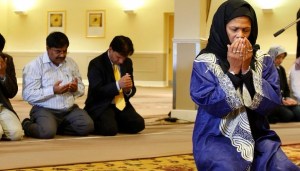
I personally began my research, in terms of Quranic studies, simply to determine whether or not the experiences of Muslim women in all parts of the world as I had traveled were in fact the experiences of Islam towards women. In other words, I looked for a source that would most closely point me to, what was the divine intention towards women? If the divine intention was backwardness, prohibitions, narrow confines and subservience, then that was truly Islam, and I personally [did] not want to have anything to do with it.
But if the true articulation was more than that, then Islam became something even more meaningful for me. So for me, the more I studied in the Quran, the more liberated I became, and the more affirmed I became as a Muslim.
 History of Christian Experience II